

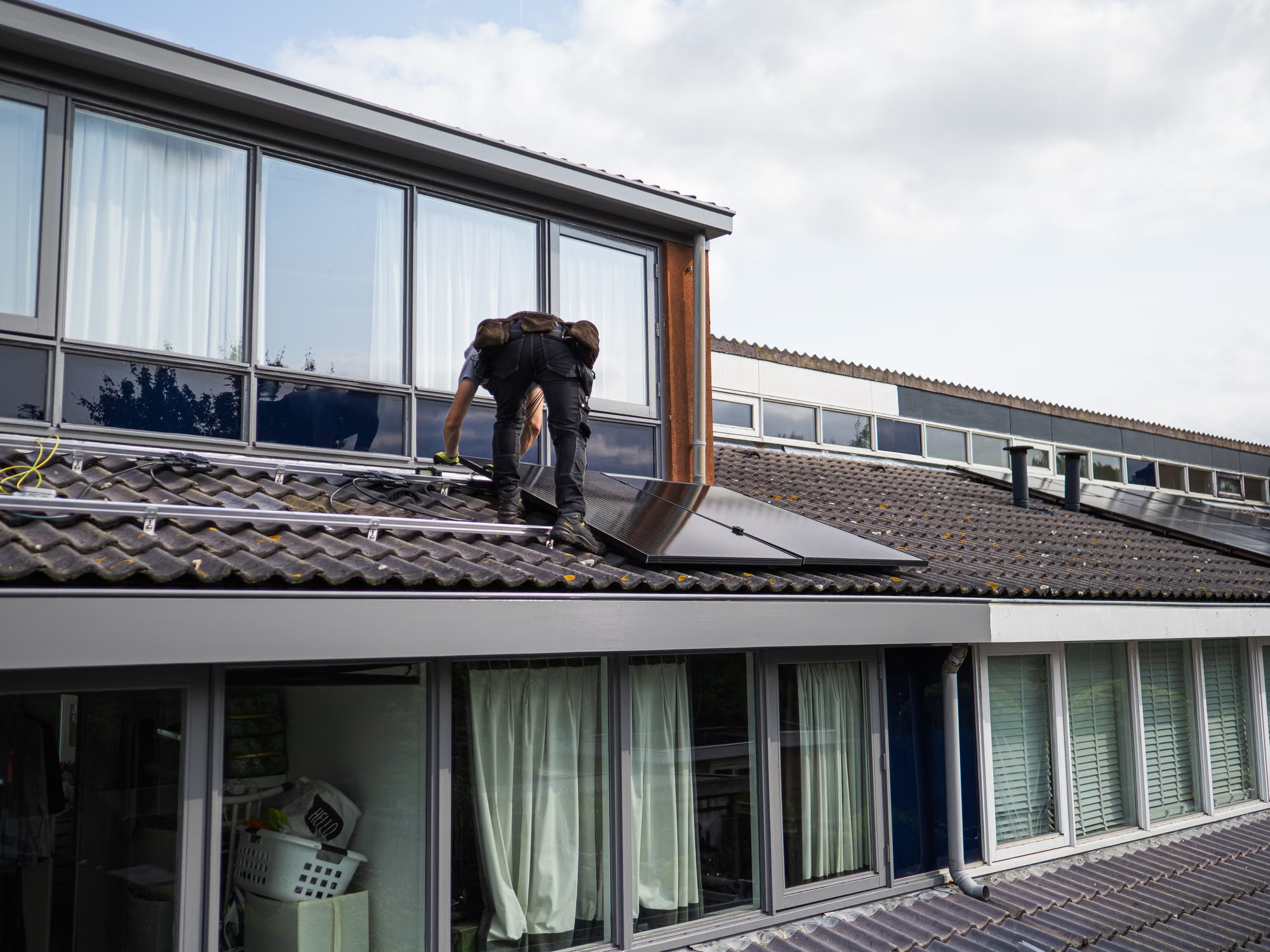
For South African businesses, rooftop solar has moved from a prestige upgrade to a practical question of operating costs. Shops, hotels, factories and office parks can use their roofs to produce electricity close to where it is consumed. The economics, however, depend on more than the number of panels on a proposal.
Thank you for reading this post, don't forget to subscribe!A credible assessment starts with the load profile. A business that uses most of its electricity during daylight can consume a large share of solar output directly. That avoids buying the same units from the grid and can shorten payback. A site that peaks at night may need batteries, a change in operating hours or a different system size. Exporting excess power can help, but the value depends on the local distributor’s rules and the terms of any power purchase or net-billing arrangement.
The National Energy Regulator’s published rules include a framework for net billing by licensed distributors. Businesses should check the current tariff, connection process and meter requirements with their municipality or Eskom before signing a contract. South Africa’s electricity regulator also publishes rules on network charges for third-party transport of energy, a key issue for companies buying power generated elsewhere.
Financing changes the calculation. An outright purchase gives the business ownership of the equipment and its performance risk. A power purchase agreement can reduce the initial capital burden, but the customer should examine the tariff escalator, contract length, termination clauses, maintenance obligations and what happens when the roof needs work. A supplier’s headline saving is not a substitute for a site-specific cash-flow model.
Battery storage is useful where a business needs backup, wants to shift solar power into evening hours, or must manage demand charges. It adds cost and should be sized around a defined operating need. The International Energy Agency’s analysis of electricity access in Africa highlights the value of combining grid supply with decentralised systems. For a commercial customer, the same principle is practical: use solar to reduce daytime purchases while retaining a reliable grid connection.
The best rooftop solar decision is supported by interval consumption data, an engineering survey and a clear maintenance plan. Ask for the assumptions behind annual yield, degradation, inverter replacement and insurance. Compare the total cost over the contract period, not only the first-year saving. South Africa’s solar opportunity is real, but disciplined procurement is what turns panels into a durable business asset.
For a larger site, the analysis should include the cost of downtime as well as the monthly electricity bill. A cold store, production line or data room may value resilience differently from an office. Ask the installer to model several operating cases, including cloudy periods and planned maintenance. That gives management a more useful decision than a single forecast based on perfect conditions. It also creates a baseline against which actual performance can be checked after commissioning.


