





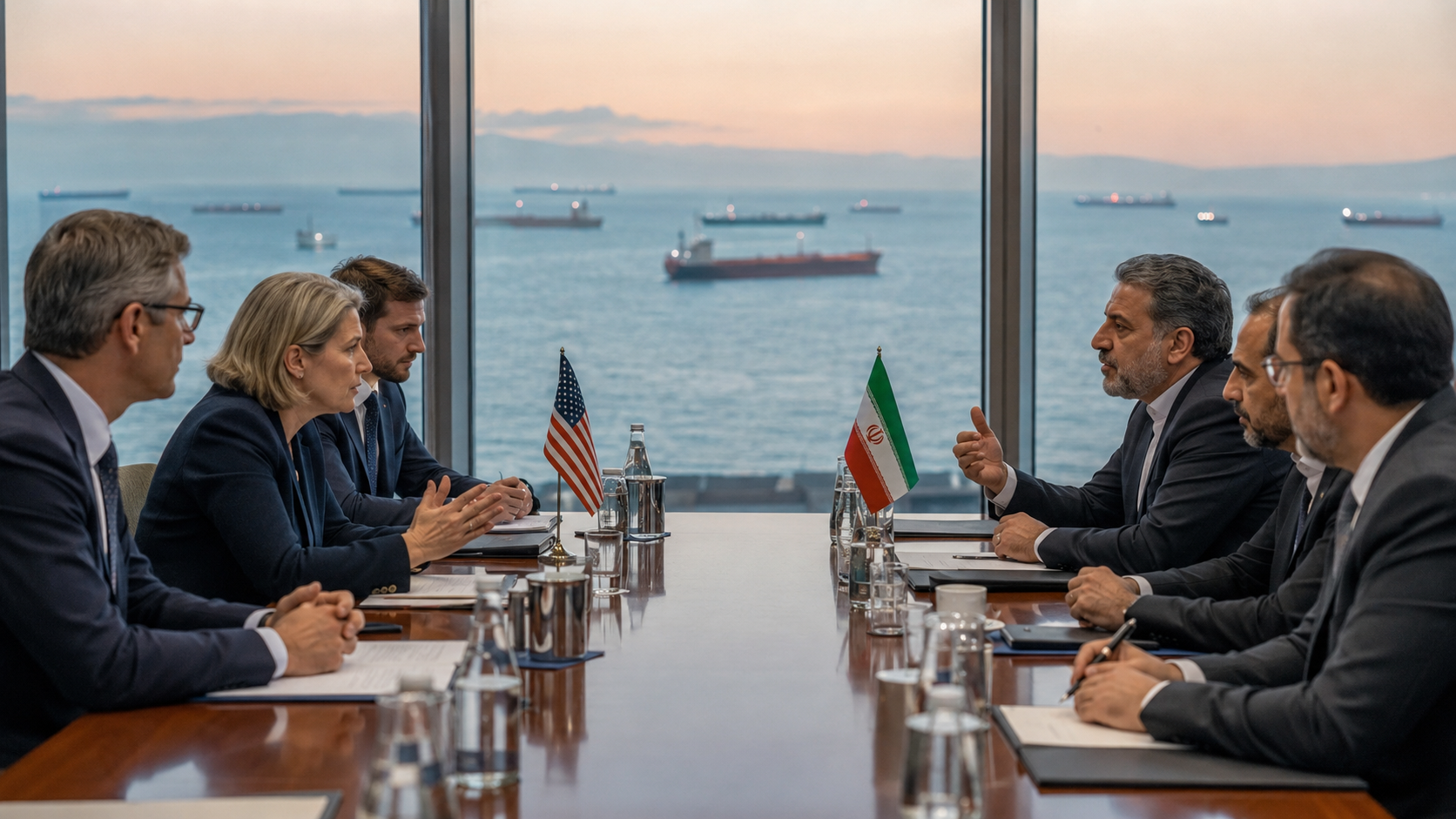
After weeks of military tension, rising oil prices and growing fears over global trade, the United States and Iran appear to be moving closer to an agreement concerning the Strait of Hormuz.
Thank you for reading this post, don't forget to subscribe!US President Donald Trump said the latest negotiations with Iran had gone well, describing the discussions in positive terms. According to reports, American and Iranian officials recently held lengthy talks as both governments searched for a way to reduce tensions around one of the world’s most important shipping routes. Reuters reported that the two sides were discussing an arrangement governing traffic through the Strait of Hormuz.
This may sound like a regional issue, but what happens in the Strait of Hormuz can quickly affect the rest of the world. A large share of internationally traded oil and gas passes through this narrow stretch of water. When ships are delayed, threatened or forced to change routes, transport costs rise. That pressure eventually reaches ordinary people through higher fuel, food and electricity prices.
One proposal reportedly being considered would give Iran a greater role in managing vessels entering the waterway. That is likely to be one of the more difficult parts of the negotiations. Washington wants shipping to move freely, while Tehran wants its security concerns and authority in the region to be recognised.
Neither government wants to appear weak. Trump wants to present the negotiations as proof that his pressure on Iran has worked. Iran, on the other hand, needs to show that it has not been forced into an agreement on American terms.
That makes the language around the talks just as important as the actual deal. Both sides need something they can take home and call a victory.
There is also a difference between reaching an agreement over shipping and resolving the wider conflict. Questions surrounding Iran’s nuclear programme, regional military influence and international sanctions remain on the table. A Hormuz agreement could calm the immediate crisis, but it would not automatically settle those bigger disputes.
For African countries, particularly those that import large amounts of fuel, a workable agreement would be welcome news. Lower shipping risk could help stabilise energy prices and reduce some of the pressure already being felt by businesses and consumers.
The talks have created a moment of hope, but it is still too early to celebrate. The real test will be whether both governments can turn positive statements into an agreement that actually holds.